
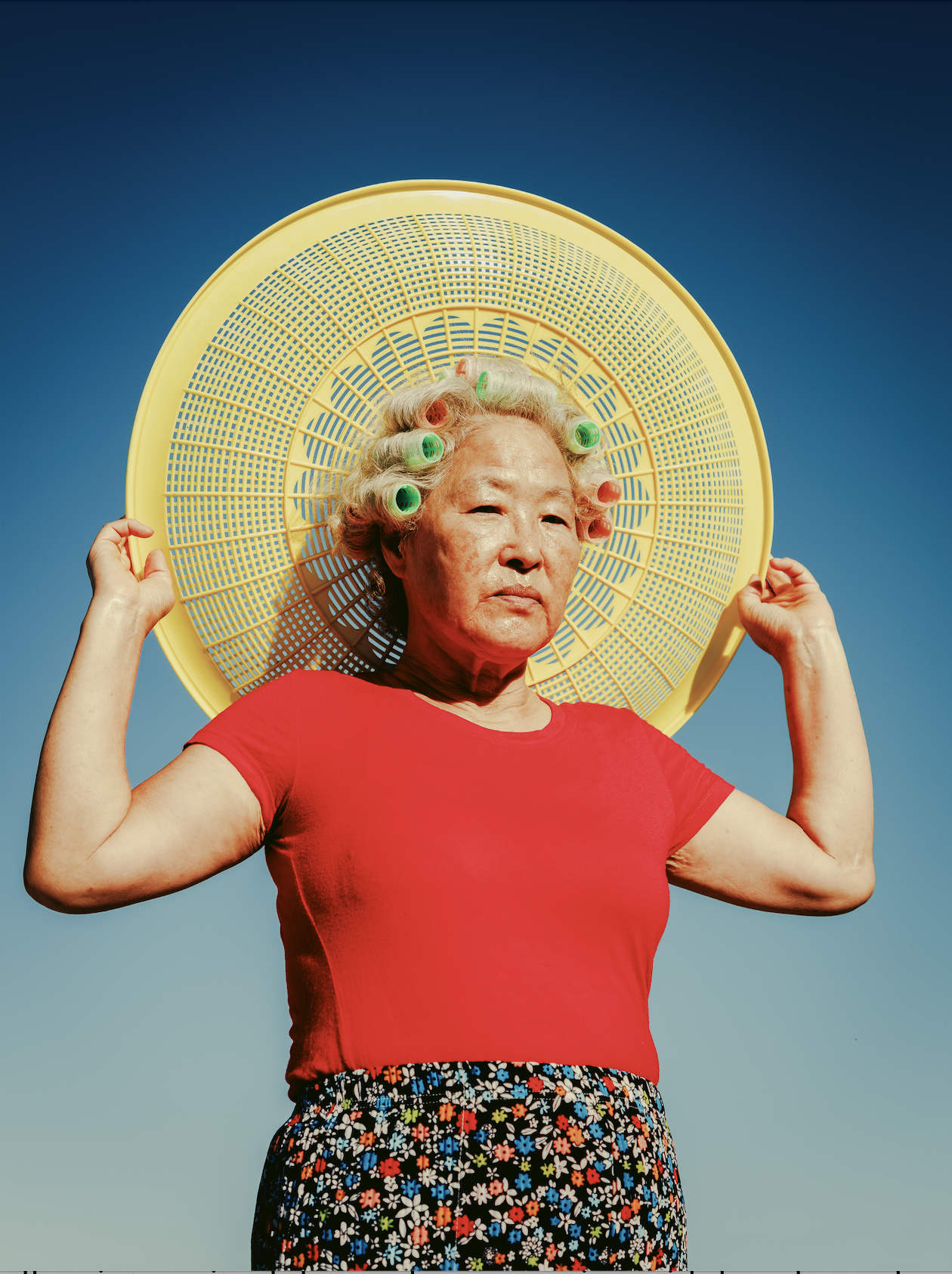
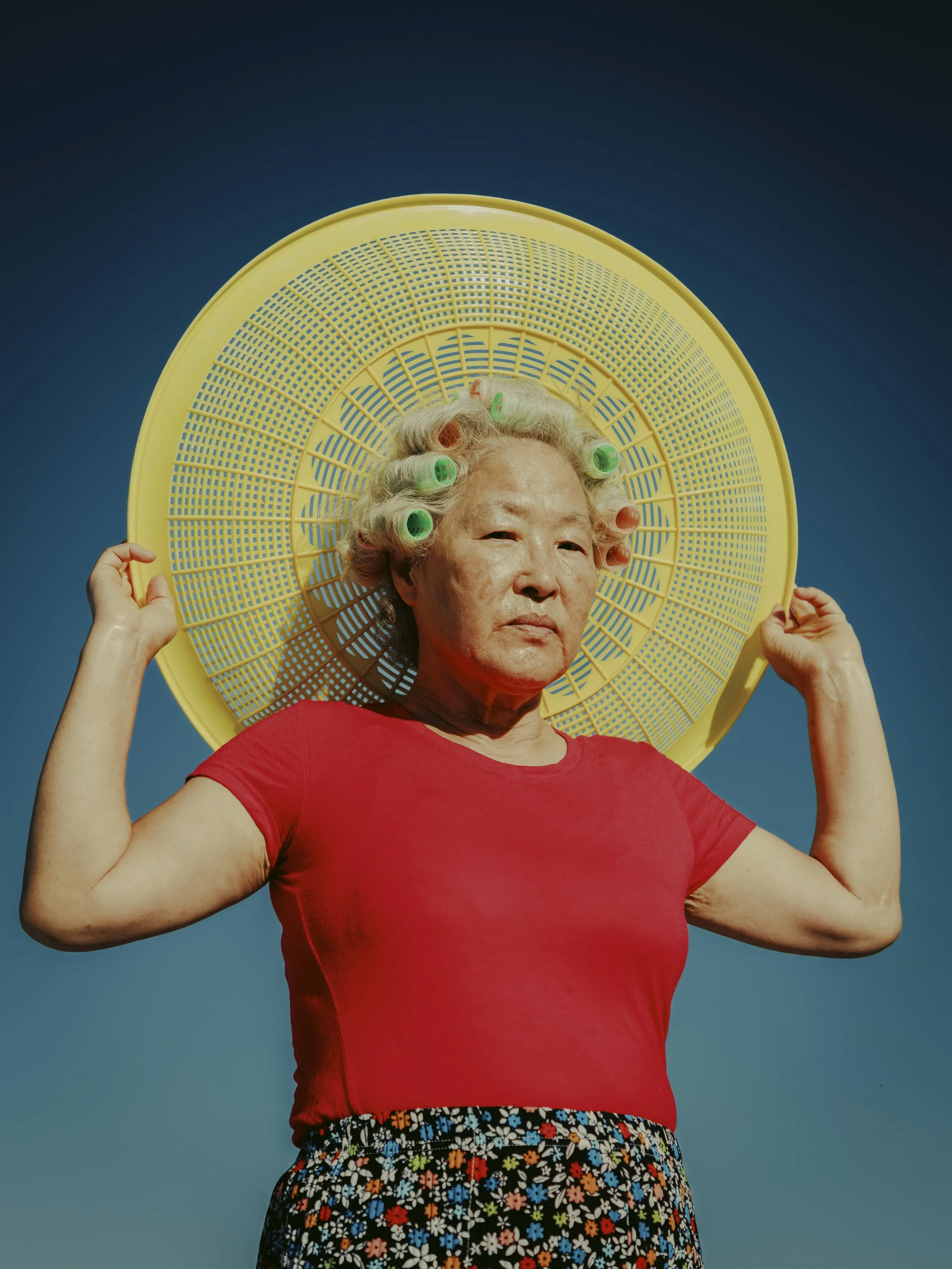
Curly Permed Hair, from the series Nirvana, 2024-Ongoing © Daesung Lee
Family Stories
23 January — 16 May 2026
The family album unfolds here through seven projects that reveal the artists’ own family stories. Unlike the anonymous photographers of The House*, these committed photographic artists find inspiration among their loved ones to create and to develop personal projects. These photographic series - most of them staged - unveil the intimate sphere of the family, moving beyond a purely documentary approach. The photographers explore universal themes such as motherhood, family ties, grief, and reconciliation.
Photography not only functions as a medium for capturing everyday family moments; here, it becomes a gateway to unexpected purposes: healing, depicting hidden stories, and revealing emotional bonds.
Some artists use the camera in a therapeutic way to rebuild connections with the past and to include those who were excluded from family narratives. Others transform loss into forms of acceptance or turn the act of farewell into a ritual that makes separation from loved ones bearable. This approach echoes the words of artist Deanna Dikeman: “We never know which time will be the last time we see someone.”
Others, instead, reveal stories that remain on the margins of public discourse: the lives of women constrained by social traditions, the complexities of bicultural couples related to language, migration, and love, as well as intimate experiences surrounding motherhood.
These narratives, sometimes humorous, sometimes melancholic, take us from the personal to the universal. Here, photography does not merely preserve the people we cherish; it also allows us to confront what memory tends to hide, forget, or reinvent.
Gabriela Torres Freyermuth, curator of the exhibition.
*Exhibition by Lee Shulman / The Anonymous Project, presented on the ground floor
Cristóbal Ascencio (1988, MX)
Las Flores mueren dos veces, 2021-2024
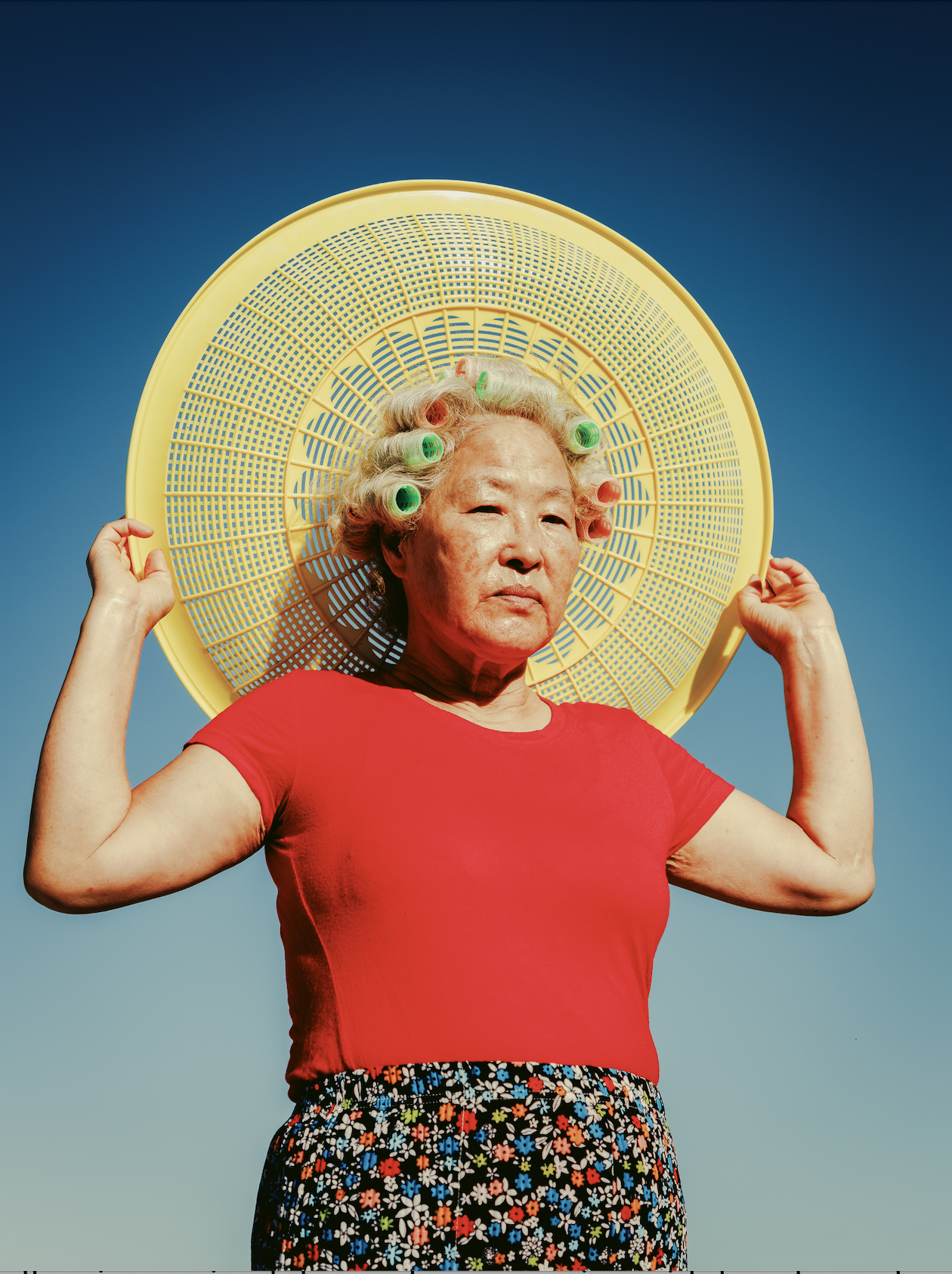
Las Flores mueren dos veces is a project that explores a parent-child relationship filled with loss, silence, death, life, and reconciliation. Cristóbal Ascencio’s father died when he was 15, but he was not told it was a suicide until he turned 30; it was then that he started to revisit the images, places, and memories that were left behind. Revisiting his family archive and the last garden where his father worked, he manipulates the structural data of photographs through glitches to create images that act as metaphors for “corrupted memories.” The farewell letter left by his father Margarito, a gardener by profession, «Forgive me and communicate with me» became a point of departure. A three-dimensional representation of the garden using photogrammetry addresses the plasticity of memory, embodied by plants his father grew that are still alive today.
-
He seeks to shape this absence through images and open a dialogue between their worlds. His approach focuses on how technological interventions alter the primal meaning of an image, expanding the medium to new forms of consumption and becoming a territory to harvest meaning and claim heritage.The project, initially a photographic series, has evolved into a Virtual Reality experience where users travel through memory, fragmented thoughts, and multiple possible realities. It unfolds in three chapters: code-altered analog photos; digital plants made following his father’s instructions; and a VR garden. Cristóbal Ascencio’s project is his answer to his father’s final words and a reflection on relationships that continue to develop after death.
Sanne De Wilde (1987, BE)
The Trilogy of Togetherness, 2025
Three Chapters on Intimacy and the Violence of Systems
The Trilogy of Togetherness is a deeply personal and political body of work unfolding in three chapters: love, life and land. Each shaped by life’s most intimate transitions and their entanglement with global systems of control. What does it mean when intimacy becomes evidence? Can photography become a tool for repair and healing rather than violence and control? When does belonging hit home — in the borders we cross, the body we inhabit, or the stories we tell?
-
The Trilogy of Togetherness is a body of work shaped by these questions. What began with love, continues as a collaborative search for visibility, meaning, place and presence in a world shaped by systems that often render us invisible. Rooted in a conceptual approach, form and content evolve together from a guiding concept — never decorative, always deliberate. Across the trilogy a range of visual strategies emerge to create works that are both critical as poetic and sensorial. Hangar is the first to present a preview of this ongoing body of work.

Deanna Dikeman (1957, USA)
Leaving and waving, 1991-2017
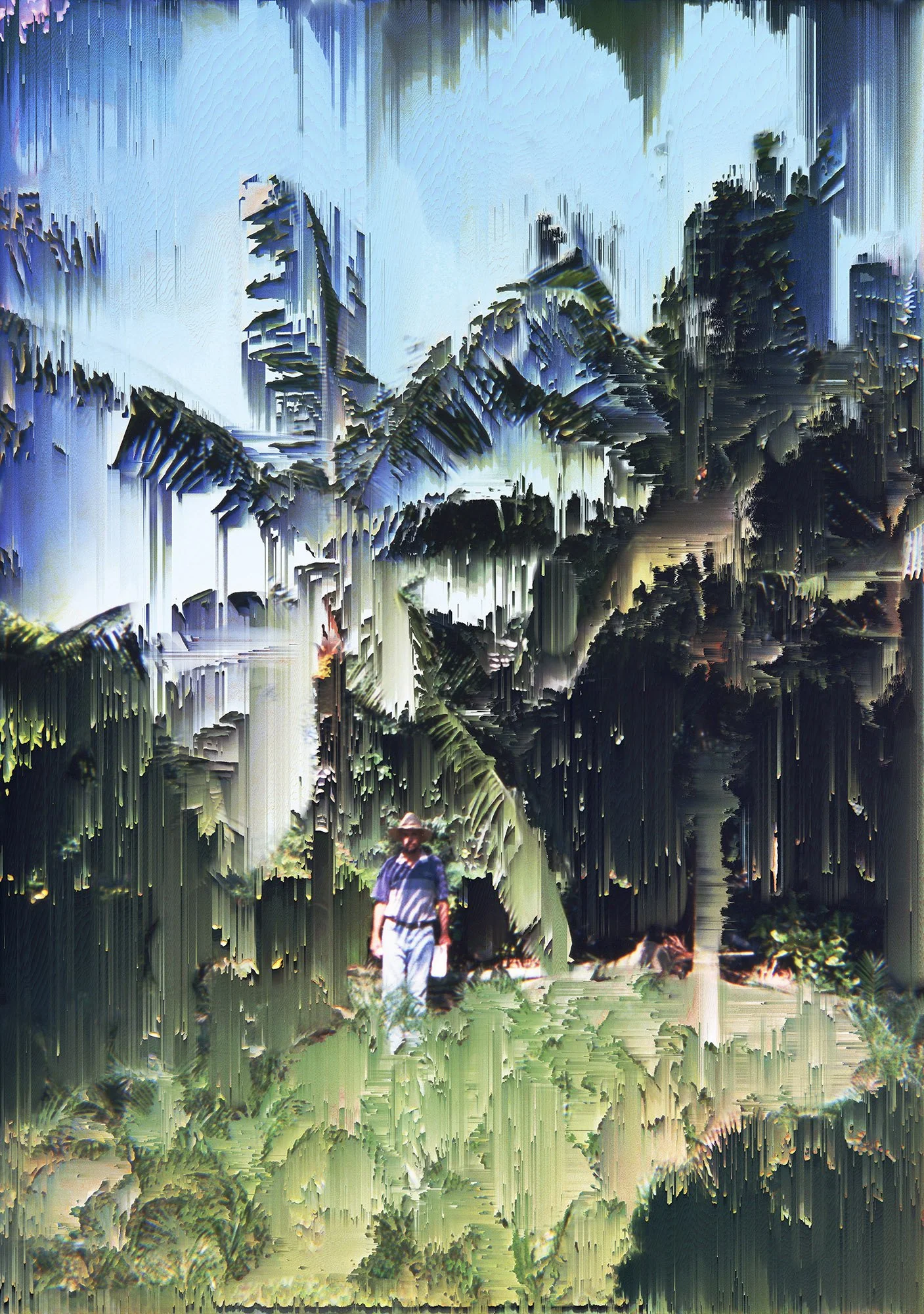
For 27 years, Deanna Dikeman took photographs as she waved goodbye and drove away from visiting her parents at their home in Sioux City, Iowa (USA). She started in 1991 with a quick snapshot and continued taking photographs with each departure. Deanna Dikeman never set out to make this series. She just took these photographs as a way to deal with the sadness of leaving. It gradually turned into their goodbye ritual. And it seemed natural to keep the camera busy, because she had been taking pictures every day while she was there. These photographs are part of a larger body of work she calls Relative Moments, which has chronicled the lives of her parents and other relatives since 1986.
-
When she discovered the series of accumulated ‘leaving and waving’ photographs, she found a story about family, ageing, and the sorrow of saying goodbye. In 2009, there is a photograph where Dikeman’s father is no longer present; he passed away a few days after his 91st birthday. Her mother continued to wave goodbye to Deanna Dikeman. Her face became more forlorn with each departure. In 2017, her mother had to move to assisted living. For a few months, Dikeman photographed the goodbyes from her mother’s apartment door. In October 2017, her mother passed away. When Dikeman left after the funeral, she took one more photograph of the empty driveway: «For the first time in my life, no one was waving back at me.»
Daesung Lee (1975, KO)
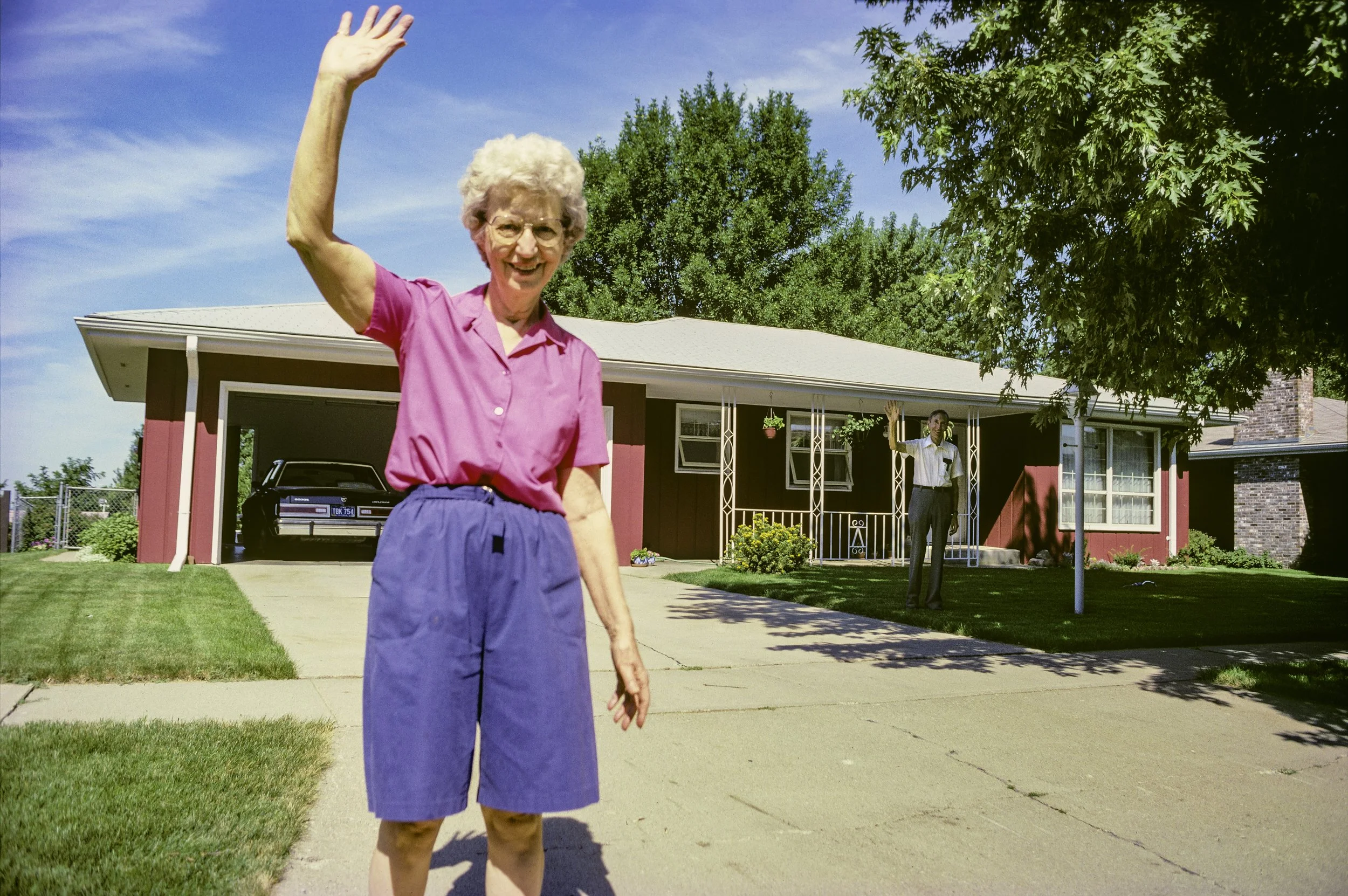
Nirvana, 2024 - ongoing
“Mom, if reincarnation is real, how would you want to be born in your next life?”
“I wouldn’t. I never want to be born again.”
In the early 1970s, Korean society was still deeply rooted in conservative Confucian values. Women’s participation in public life was rare, and their expected role was almost exclusively limited to marriage and domestic duties. It was common for three generations to live under one roof, and Daesung Lee’s mother was responsible not only for his grandparents, but also for uncles, aunts, his sister, and him - managing every aspect of household life. Women of that era silently endured everyday discrimination and domestic violence, living not as individuals with names and identities, but as someone’s wife, someone’s mother.
-
In Buddhism, nirvana is reached only when one releases all karma and breaks free from the endless cycle of rebirth. Watching his mother live her life, Daesung Lee came to hope that in her next life she could live more for herself - or better yet, that she would never return to this cycle of suffering, and finally attain nirvana. NIRVANA is a project that sheds light on the suppressed lives and quiet strength of women in traditional Korean society, as seen through personal memory. Daesung Lee doesn’t wish to portray their stories as mere tragedies. Instead, by reinterpreting their experiences with humor and irony, he aims to transform their narratives into something positive.
“I hope to breathe life into voices that have long been silenced.” - Daesung Lee
Alma Haser (1989, DE)
Everything has an ending only the sausage has two, 2024
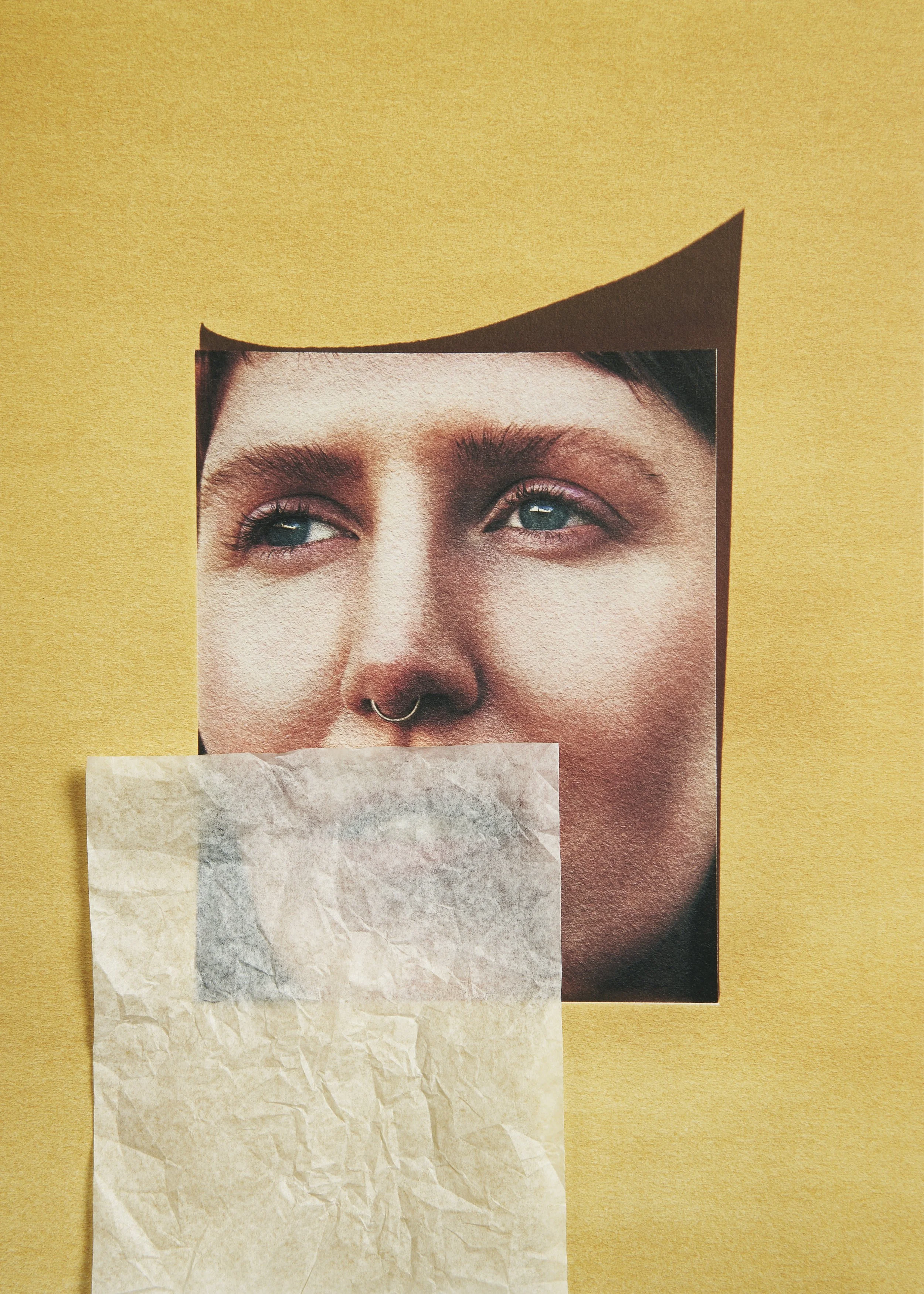
Alma Haser transforms the quirks of the German language into sculptural images that blend humour, history, and imagination.
Raised in the Black Forest by a German father and an English mother, she grew up bilingual and fascinated by the poetic absurdity of literal translations. Her playful series explores German idioms and their often-surreal English equivalents, such as “We are sitting beautifully in the ink” (to be in trouble) or “To have a tomcat” (to have a hangover). A defining feature of Alma Haser’s work is the fusion of photography and sculptural techniques: many pieces take three-dimensional form through folds, layers, and structures that bring language to life.
-
Her inventive approach is also shaped by her dyslexia, which heightens her sensitivity to the fluidity and visual potential of words. Alma Haser transforms the quirks of the German language into sculptural images that blend humour, history, and imagination. Raised in the Black Forest by a German father and an English mother, she grew up bilingual and fascinated by the poetic absurdity of literal translations. Her playful series explores German idioms and their often-surreal English equivalents, such as “We are sitting beautifully in the ink” (to be in trouble) or “To have a tomcat” (to have a hangover). A defining feature of Alma Haser’s work is the fusion of photography and sculptural techniques: many pieces take three-dimensional form through folds, layers, and structures that bring language to life. Her inventive approach is also shaped by her dyslexia, which heightens her sensitivity to the fluidity and visual potential of words.
Francesca Hummler (1997, DE/US)
Our Dollhouse (Unsere Puppenstube), 2021
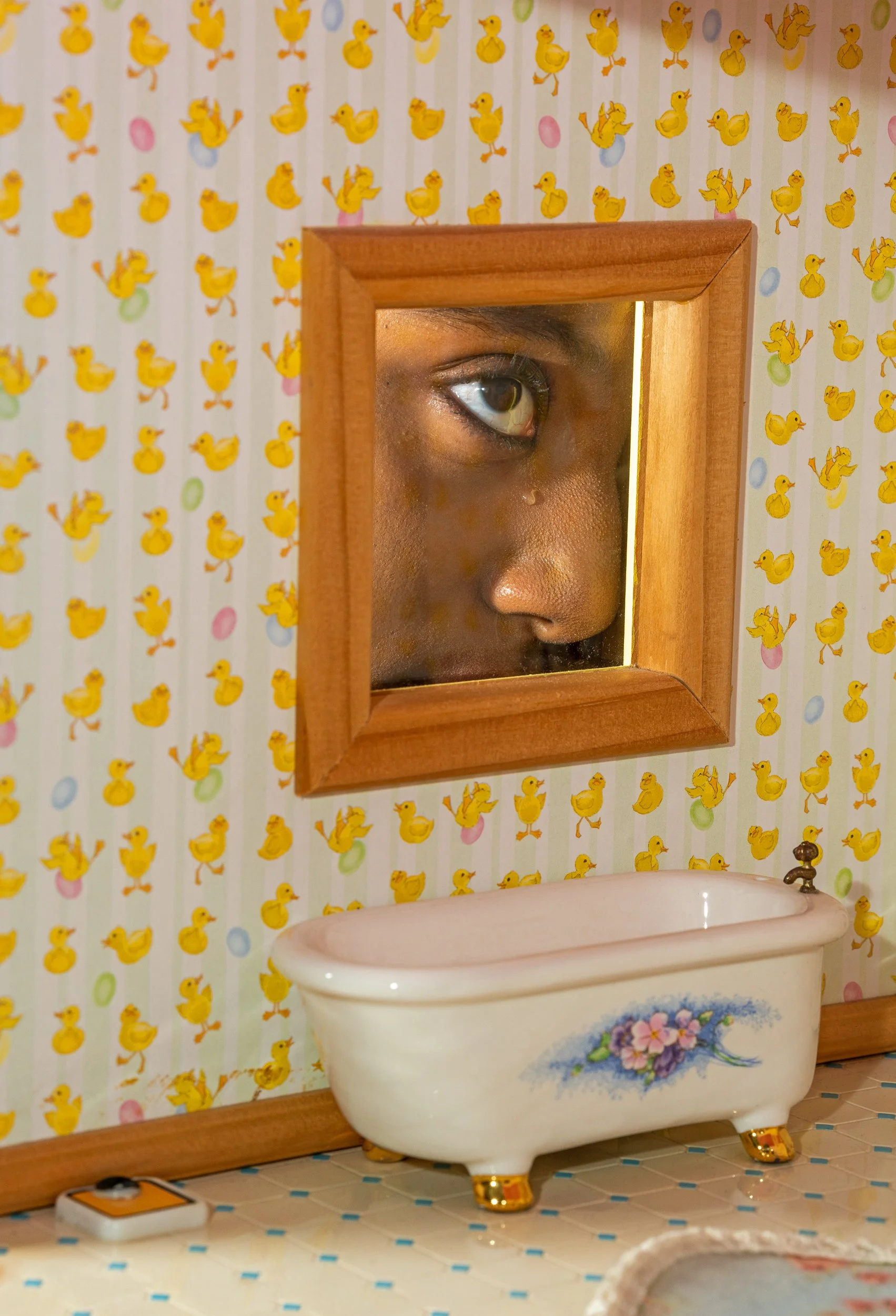
Francesca Hummler has photographed her younger sister for over thirteen years, developing a practice rooted in photo-therapy that helps her sister build self-confidence, navigate her identity as a young Black girl in a German-American family, and confront insecurities common in adolescence. With a ten-year age gap and parents who are not American, Francesca often became a cultural mediator, addressing sensitive topics her sister could not bring to their parents. This series reflects both the racist reactions her parents faced from extended family in Germany after the adoption and her sister’s desire to connect with traces of her biological family. Centered around a multigenerational dollhouse the sisters furnished together, the work affirms her sister’s rightful place in the family’s lineage despite ignorant objections.
-
The dollhouse also echoes moments of outsideness, such as when Francesca and her mother speak Schwäbisch around her. Motivated by repeated public questioning of their relationship, Francesca uses photography to express her responsibility to support her sister as she grows up in a white family within a racially divided United States, offering resonance to anyone who has ever felt out of place despite belonging.
Danilo Zocatelli Cesco (1989, BR)
Dear Father, 2023
Dear Father is a project born from Danilo Zocatelli Cesco’s desire to establish a connection with his father. Having grown up on a farm in rural Brazil, he always felt distant from him, especially as he came into his identity as a queer youth. He constantly looked at his father, searching for a glimpse of himself, but instead saw nothing. As he grew older, became more empowered in his sexuality, and found his drag community, he began to imagine how the camera, drag, and photography might provide a bridge for them to reach common ground. Painting his father’s face in drag became an exercise in freedom. The transformation, just a wig and makeup, did not aim to change his father, but to offer him a glimpse into Danilo’s world. They faced each other literally and lovingly. His father trusted him to create a visual space where radical acceptance exists, where he could finally see himself in his father, and his father in him.
-
The images in Dear Father revisit and rewrite childhood memories, queering moments of masculinity with which he once struggled: tending to the land, playing football, attending church, driving a tractor, or slaughtering an animal. These once-alienating experiences became images he could finally connect with. In this moment, the roles reversed: his father became the performer, and Danilo with his queerness, long hair, and piercings was normalized. Inspired by a letter Danilo Zocatelli Cesco wrote to his father, lines from the letter became the titles of each image, reinforcing the personal and transformative nature of the work. Altogether, the series held up a mirror to each other and allowed them to truly see one another for the first time. In confronting what once divided them, Danilo Zocatelli Cesco and his father forged an unexpected, necessary, and deeply desired alliance that will only grow stronger from now on.

